Wool and Cashmere Scarves: Choosing by Use
Wool and cashmere scarves are best sorted by setting and occasion, not by family name alone. This article sets out the sorting questions and the inquiry shape for lists spanning both families.
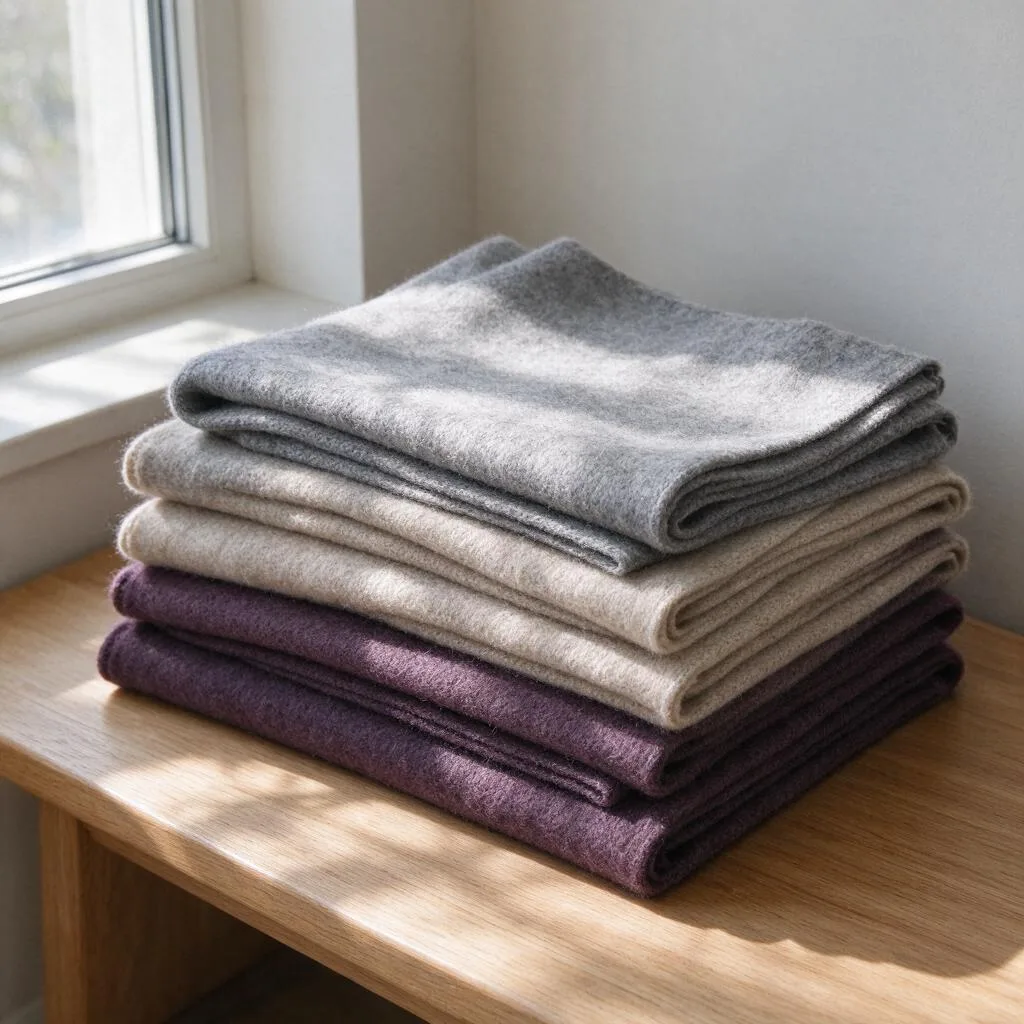
Two families, one sorting method
Wool scarves and cashmere scarves share the same sorting method, even though buyers often arrive at each family with different occasions in mind. The method is the same for both: start with the setting, then the occasion, then the shape of the list itself. A list sorted by setting and occasion reads as groups with a purpose, and the questions beside each item follow the grouping.
Family names alone do not sort a list. A wool scarf list and a cashmere scarf list for the same occasion share more questions than two lists from one family for different occasions. Sort by the use first, and let the family name sit inside the group it belongs to, not above it.
Settings buyers name most often
Outdoor settings lead the wool scarf lists buyers write most often, with daytime outings close behind and travel days behind those. Evening occasions and gift lists lead the cashmere scarf lists buyers write most often, with daytime outings and travel days behind those. The two patterns overlap in the middle, and the overlap is where grouping matters most: a list spanning both families needs the setting named for each group, or the groups blur together.
Name the setting for each group in the inquiry, in the buyer's own words, beside the items the setting belongs to. A setting named once for the whole list leaves the question open for groups the setting does not cover. Settings belong to groups, and groups belong in the list.
Occasions inside settings
Inside each setting sit the occasions: the specific days and events the items are for. A daytime outing and an evening occasion inside the same outdoor setting are different groups, with different questions beside their items. Name the occasion for each group, beside the setting it belongs to, so the list reads as setting, then occasion, then items.
Gift lists deserve a group of their own inside any setting. A gift list carries questions the wearer's own list does not: the recipient group, the occasion for the gift, and anything to settle in writing beside the gift items. Keep gift items in their own group, with the gift occasion named, so the gift questions never sit beside items they do not belong to.
Keeping the families separate in the list
When a list spans wool and cashmere, keep the families in separate groups, with the setting and occasion named for each group. A mixed list with no family grouping makes the questions harder to place, because a colour or shape question for one family can sit beside an item from the other family by mistake. Family grouping costs a few lines and keeps every question with its items.
The same applies inside each family. Shape groups sit inside family groups: triangle shapes and blanket shapes in their own groups within cashmere, long shapes and large shapes in their own groups within wool. Name the shape group for each set of items, and put the shape and size requirements beside the group they belong to.
Colour, shape and size requirements
Colour, shape and size words appear in buyer searches for both families, and buyers often arrive with requirements in mind for a whole list. This site publishes no colour, shape or size claim for any item. Name the requirements in the inquiry, beside the items and groups they belong to, and ask what applies to each item. Requirements named once for the whole list leave the question open for groups the requirements do not cover.
- The setting and the occasion for each group of items
- The family group for each item: wool or cashmere
- The shape group inside each family group, where shapes differ
- Colour, shape and size requirements, beside the items they belong to
- Quantities beside each item, and the destination market for the list
Putting the inquiry together
A finished inquiry carries the item list grouped by family and by setting, the quantities beside each item, the destination market for the list as a whole, and anything to settle in writing beside the items it belongs to. Add the colour, shape and size requirements beside the items they belong to, and keep the list and the questions together in one message.
Read the message once as a stranger would before sending: does every item sit in a family group, does every group carry its setting and occasion, does every requirement sit beside the items it belongs to. A message that passes that reading carries everything the inquiry needs in one place. The family pages for wool scarves and cashmere scarves give the same inquiry shape for single-family lists.
A worked grouping, in words
Picture a list of twelve items: four wool scarves for outdoor settings, four cashmere scarves for evening occasions, and four cashmere scarves for a gift list. The grouping runs in three passes. First, split by family: wool in one group, cashmere in another. Second, split the cashmere group by occasion: evening occasions in one sub-group, the gift list in another. Third, name the setting and occasion for each group, put the quantities beside each item, and add the colour, shape and size requirements beside the items they belong to. The finished list has three groups, each with its own setting, occasion and requirements, and no question sits beside items it does not belong to.
Now picture the same twelve items written as one undifferentiated list, with the requirements written once at the end. The reader must rebuild the groups before placing a single question, and a colour requirement for the evening group can sit beside a gift item by mistake. The facts are the same in both messages; only the grouping differs. Grouping is what turns a list of items into a list that can be read, and the reading is what the inquiry is for.
Gift lists repay one extra pass of their own. Read the gift group once for the recipient group and the gift occasion, and check that every gift item carries the occasion beside it. A gift item with no occasion named reads as an ordinary item, and the questions that belong to the gift occasion sit beside it with no occasion to explain them. Name the occasion, keep the gift group separate, and the gift questions stay with their items.
Related pages
Send an inquiry
Send your item list and quantities for a quote. Group the list by family and by setting, with quantities beside each item.